Workflow
·For Franchise marketing
Rolling Out Vehicle Wraps to 100 Franchise Locations: A Playbook
A franchise marketing lead's playbook for designing, controlling, producing, and refreshing vehicle wraps across 100+ franchisee-owned locations without losing brand consistency.
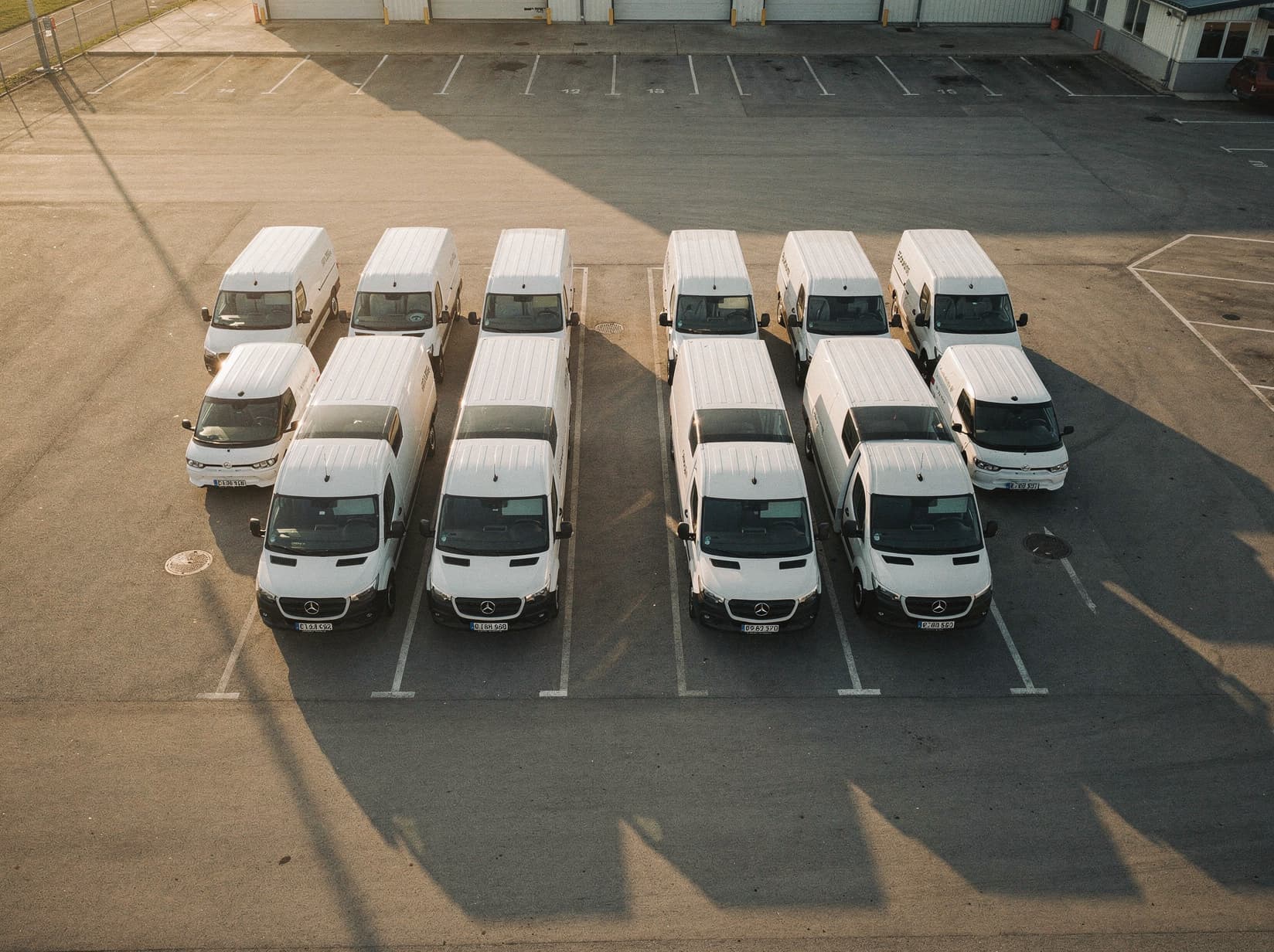
A franchise wrap rollout is not a wrap project. It's a program. The single-vehicle decisions a small-business owner makes — pick a designer, pick a shop, pick a material — multiply across 100+ franchisees, each with their own preferences, their own local print vendor, and their own ideas about what the wrap should look like. Without a playbook, the program produces 100 different wraps and one frustrated brand team.
This is the playbook for the franchise marketing lead running the rollout. It covers the seven decisions that determine whether the program produces brand consistency at scale or a slow-motion train wreck of inconsistent fleets across markets. The audience is the marketing lead, the COO who signs the budget, and the franchise advisory council that has to buy in.
Key takeaways
- 01The single biggest decision in a franchise wrap rollout is the variability rule: what franchisees can change and what they can't. Get this wrong and you get 100 different wraps. Get it right and you get a coherent fleet across markets.
- 02HQ owns the design. Franchisees execute. Mixing the two — letting a franchisee 'tweak' the design with a local designer — is the single most common failure mode. Build the system to prevent it.
- 03A national printer or 2–3 preferred regional printers is almost always the right answer. A free-for-all where each franchisee picks their own printer guarantees inconsistent color, material, and lifespan across the fleet.
- 04Plan the refresh cycle from day one. Wraps live 5–7 years; franchise vehicle turnover is 3–5 years. The system has to handle vehicles cycling in and out of the wrap program continuously, not as a one-time project.
Why most franchise wrap rollouts fail
Three patterns that show up in the post-mortem of every messy franchise rollout.
HQ designed the wrap, sent it to franchisees, and trusted them to handle execution. Franchisees printed at different shops, used different materials, picked different install crews. Two years in, the fleet across markets looks like five different brands.
HQ tried to control everything, including which colors franchisees could feature in their local taglines. Franchise advisory council pushed back. The system collapsed under its own rigidity. Franchisees defected to using their own local designers.
HQ designed the wrap once and never planned for refresh. Five years later, half the fleet is faded, a quarter has been replaced by franchisees with new vehicles and no wrap program, and a quarter still looks new. The brand looks inconsistent because the program had no temporal dimension.
A good playbook prevents all three.
The seven decisions
In the order you'll have to make them.
1. Centralize the design at HQ
Decision: who owns the wrap design? Answer: HQ, always.
The franchisor's brand team designs the wrap. The franchisee buys it as a product. This is the same model that works for every other franchise brand asset — signage, packaging, uniforms, menu boards. Letting franchisees commission their own wrap designs through their own local designers produces the inconsistency you're trying to prevent. It's also more expensive — every franchisee paying $2K to $5K for a custom design instead of HQ paying once for a design that scales.
The decision: the brand team produces the wrap design. The output is a finished design system, not a finished wrap file. That distinction matters because the system has to flex to multiple vehicle types (van, truck, box truck, SUV) and to the variability rules in decision 3.
2. Decide the vehicle scope
Decision: which vehicles are in the program?
Most franchise systems have multiple vehicle types in the field. A pizza chain might have delivery cars, a service brand might have vans and pickup trucks, a cleaning company might have cargo vans and SUVs. Each vehicle type needs its own panel layout in the design system.
Scope decisions to make:
- Required vs. optional vehicles. Are franchisees required to wrap all branded vehicles, or only the customer-facing ones? Most systems require wrapping anything used for service calls; personal vehicles used by owners are exempt.
- New vs. existing fleet. Do you grandfather existing un-wrapped vehicles or require them to be wrapped within a defined window?
- Replacement triggers. When a franchisee replaces a vehicle, when does the new vehicle have to be wrapped? Most systems require it within 30 to 60 days of purchase.
The mistake here is leaving any of these scope decisions to franchisee interpretation. Document them in the franchise operations manual.
3. Define the variability rules
Decision: what can franchisees change, and what can't they?
This is the single most important decision in the playbook. Franchisees will push for more variability than is good for the brand. The brand team will push for less variability than is realistic for franchisee operations. The right answer is in the middle, and it should be written down before the first vehicle is wrapped.
A working framework:
Locked (HQ controls, franchisees cannot change):
- Logo placement, size, and orientation
- Brand colors (PMS specs)
- Brand typography
- Overall layout and panel design
- Required regulatory and corporate copy (corporate phone, website root domain, franchise system identifier)
Controlled variability (franchisees can choose from approved options):
- Local phone number (from a list of approved formats)
- Local website URL or landing-page slug (e.g.,
brand.com/seattle) - Service-area badge (city or region name in approved format)
- Local promotional callout in approved spaces (the "Now Hiring" or "24/7 Service" badge — pulled from an approved library)
Open (franchisees decide):
- The vehicle itself (model, year, trim — though approved makes/models help)
- Install shop selection from the approved list
- Refresh timing within the brand's required window
The mistake to avoid is the false middle. "Franchisees can adjust the colors to match their local market" is not a variability rule. It's the absence of one. Real variability rules are explicit, enumerated, and produce predictable outputs.
4. Choose the printer network strategy
Decision: one national printer, two to three preferred regional printers, or franchisee-choice from an approved list?
The three options have real tradeoffs. The single national vs. regional vendor comparison is the primary decision; franchisee-choice from an approved list is the fallback for small systems.
The third option — franchisee-choice from an approved vendor list — fits small systems (under 50 active vehicles) where HQ centralization isn't justified by scale. The tradeoff: lower color and material consistency across markets, higher per-vehicle cost (each franchisee pays retail), but no contract management overhead at HQ.
For most franchise systems above 50 active vehicles per year, the right answer is two to three preferred regional printers, with HQ negotiating the contracts and franchisees ordering through a portal. This balances consistency, cost, and local install relationships.
5. Build the production and approval workflow
Decision: how does a franchisee actually order a wrap, from initial request to install?
The workflow that works for most systems:
- Franchisee onboards a new vehicle in the franchise portal — vehicle make, model, year, VIN, install location.
- HQ-approved design auto-populates with the franchisee's local variables (phone, URL slug, market name) pulled from the franchise record.
- Franchisee reviews the auto-generated design and approves or requests changes within the controlled-variability rules.
- Print order goes to the approved vendor for that region.
- Install scheduled at the franchisee's nearest approved install partner.
- Photo confirmation uploaded to the portal once installed; HQ flags any visual inconsistencies for follow-up.
- Vehicle added to the active-fleet roster with install date, vinyl spec, and refresh due date.
The friction point in most systems is step 3. Franchisees want to "tweak" the design beyond the variability rules. The portal needs to enforce the rules at the UI level — if the rule is "phone number only, no other copy changes," the franchisee shouldn't have a free-text field that lets them add a tagline.
6. Set the brand audit cadence
Decision: how does HQ verify that wraps in the field still look like the brand?
A good audit cadence:
- Quarterly photo audit. Franchisees submit 4-side photos of each wrapped vehicle every quarter. HQ scans for fading, damage, and rogue modifications. This is the lowest-cost discipline and the highest-impact one.
- Annual on-the-ground spot checks. Brand team or field reps physically inspect a sample of vehicles in target markets. Catches things photos miss (color drift, lifting at panel edges, install quality).
- Refresh-trigger thresholds. A wrap that fails the photo audit (visible fading, damage, or off-brand modifications) triggers a refresh order with shared cost between franchisor and franchisee — the cost split should be in the franchise agreement.
The audit is not punishment. It's the mechanism that maintains the brand consistency the program is supposed to produce. Franchisees who understand this support the audit. Franchisees who don't understand this need to hear the case made before the audit lands as a surprise.
7. Plan the refresh cycle
Decision: what's the policy on refreshing wraps as vehicles age and as the brand evolves?
Two refresh triggers:
Vehicle refresh. A franchisee replaces a vehicle every 3 to 5 years on average. The new vehicle gets the current wrap design at HQ's then-current spec. This is the steady-state refresh cycle and most of the program's annual production volume.
Brand refresh. Every 5 to 8 years, the brand updates the wrap design — new color palette, refreshed typography, evolved layout. The refresh has to roll out across the existing fleet on a defined schedule. Most systems give franchisees 18 to 36 months to refresh wraps to the new spec, with HQ subsidizing some portion of the cost.
The mistake to avoid is the unmanaged drift. If HQ refreshes the brand but doesn't enforce a fleet refresh window, the field looks inconsistent for years. If HQ refreshes too frequently, franchisees lose patience and the program loses credibility. Five-year refresh cycles are the practical norm for most franchise systems.
Tip
The wrap design system should be built to outlive its own design. When you launch a refreshed brand, the underlying panel layouts, install plans, and printer relationships should carry forward — only the design content changes. Building the program this way means the second refresh costs 1/3 of what the first one cost.
A phased timeline
A realistic 18-month rollout for a 100-vehicle franchise system, assuming you're starting from zero (no existing wrap program):
Months 1–3: Design and system.
- Brand team designs the wrap system across the vehicle types in scope.
- Variability rules drafted and reviewed with franchise advisory council.
- Printer RFP issued; 2–3 regional vendors selected.
- Operations manual updated with the wrap program section.
Months 4–6: Pilot.
- 5 to 10 franchisees in 2 markets pilot the program.
- Production workflow tested end-to-end.
- Audit cadence dry-run.
- Issues surface and the system is refined before national rollout.
Months 7–12: National rollout, new vehicles.
- All new vehicles entering the franchise system get the wrap.
- Franchisees with existing vehicles encouraged but not required to wrap.
- Cost-share program for existing vehicles: HQ subsidizes 30% to 50% of the wrap cost for early adopters.
Months 13–18: Existing fleet conversion.
- Existing un-wrapped vehicles required to wrap within the defined window (typically 12 months from this phase start).
- Audit cadence formalized.
- First post-rollout review at month 18 to assess consistency, identify problem markets, and adjust the variability rules if needed.
Steady state (18+ months): New vehicles wrapped within 30 to 60 days of franchisee acquisition. Quarterly photo audits running. Refresh cycle planning begins around month 36.
Cost model and budget framing
A 100-vehicle program at typical costs:
- Wrap design (one-time, paid by HQ): $15,000 to $40,000 depending on vehicle type variants.
- Wrap production and install (per vehicle, paid by franchisee, sometimes cost-shared with HQ): $3,500 to $6,500 depending on vehicle type.
- Total program cost over 18 months at the franchisee level: roughly $400,000 to $700,000 across 100 vehicles.
- HQ-side ongoing cost: portal/tooling, audit labor, periodic design refresh — typically $20,000 to $50,000/year for a 100-vehicle program.
The budget framing for the COO: this is a roughly half-million-dollar program over 18 months across the system, mostly funded by franchisees, producing brand-consistent vehicle presence in 100 markets. The alternative — letting franchisees DIY — is roughly the same total cost (because franchisees pay retail without volume discounts), with significantly worse brand consistency and no ability to refresh the fleet on the brand team's schedule.
The real ROI argument is brand value over the wrap's 5-to-7-year lifespan, not the wrap cost itself. A consistent fleet in 100 markets is what the program buys; the wrap is just the artifact.
What kills programs
A few specific failure modes worth flagging upfront so the program can be designed to prevent them.
Franchisee resentment over forced changes. If the program is announced as a mandate without franchisee input, the franchise advisory council will push back hard, and the program loses credibility. Bring the FAC in during design (months 1–3), not after. Their feedback usually improves the program; their endorsement usually saves it.
Low-quality printer in the network. One bad printer in the approved-vendor list can damage the brand across an entire region. Audit print samples before signing the contract, not after the first 20 vehicles are out the door.
Refresh that's too aggressive. If HQ refreshes the brand every two years, franchisees stop investing in wraps because the wrap will be obsolete before it pays back. Keep brand refreshes to 5+ year intervals.
Untracked variability creep. Year one of the program, franchisees follow the rules. Year three, someone added a local tagline that broke the layout, and nobody noticed. The audit catches this. Without the audit, the variability creep continues until the brand is unrecognizable across the system.
If you're a franchise marketing lead planning a multi-location wrap rollout, Surface for franchise marketing → handles the centralized-design / controlled-variability workflow — HQ owns the master design, franchisees order through a portal that enforces the variability rules, and the production handoff goes to your approved printer network with consistent specs every time.
Related on Surface
Try Surface for free
The design tool built for vehicles, billboards, and every surface in between.
Keep reading
More from the blog
Workflow
How to Add Vehicle Wrap Design to Your Freelance Service Menu
A guide for freelance designers adding vehicle wraps as a billable service — what's different from print, how to learn it, what to charge, and where wrap clients live.
Read
Workflow
Migrating from Illustrator to Surface: A 30-Day Plan for Wrap Shops
A practical 30-day migration plan for wrap shops moving from Adobe Illustrator to Surface for vehicle wrap design — week by week, with the file conversions, training, and breakeven math.
Read
Workflow
Adding Design as a Service: A Playbook for Large-Format Print Vendors
A working playbook for large-format print vendors adding design services — the upsell math, the workflow models, the staffing decisions, and the pricing structures that turn print into design + print.
Read