Pricing
·For Brand teams
How Much Does a Vehicle Wrap Cost in 2026? Real Pricing by Vehicle Type
Real 2026 pricing for vehicle wraps by type — sedans to box trucks to fleet vans — plus the variables that explain why the same van gets a $1,500 quote and a $5,000 quote.
A vehicle wrap quote is mostly opaque to the buyer. Two shops quote the same van and one says $1,800, the other says $4,800. Both are right — they're quoting different jobs, with different materials, different design effort, and different install labor.
This guide breaks down what you actually pay for in 2026: real published ranges by vehicle type, the four variables that move the number, and how to read a quote so you know whether you're getting fair pricing or being upsold.
Key takeaways
- 01Vehicle wrap costs vary 3–5× for the same vehicle depending on material grade, design complexity, install labor, and coverage. The 'right' price depends on what you're buying.
- 02Cast vinyl + cast laminate (the warranty-grade combo) costs roughly 2× calendared materials, but lasts 5–7 years instead of 1–3. For long-term branding it's almost always the right call.
- 03Partial wraps run 30–60% of full-wrap pricing for the same vehicle. They're often the right answer for budget-constrained brand rollouts — but only if the design accounts for the unwrapped paint color.
- 04Regional pricing varies meaningfully. Major metros (NYC, LA, SF, Chicago) run 20–40% higher than secondary markets, primarily due to install labor rates and shop overhead.
What you'll pay in 2026 by vehicle type
These are full-wrap, professionally installed prices using cast vinyl and laminate. Calendared materials and partial coverage come in lower (covered below). Custom design fees are included in the higher end of each range; reused or templated designs come in lower.
| Vehicle | Typical full-wrap range | Notes |
|---|---|---|
| Sedan / compact car | $1,500 – $3,500 | Lower end for simple liveries; higher end for full color change with cast film. |
| SUV / crossover | $2,500 – $4,500 | More square footage than a sedan, plus complex C-pillar curves. |
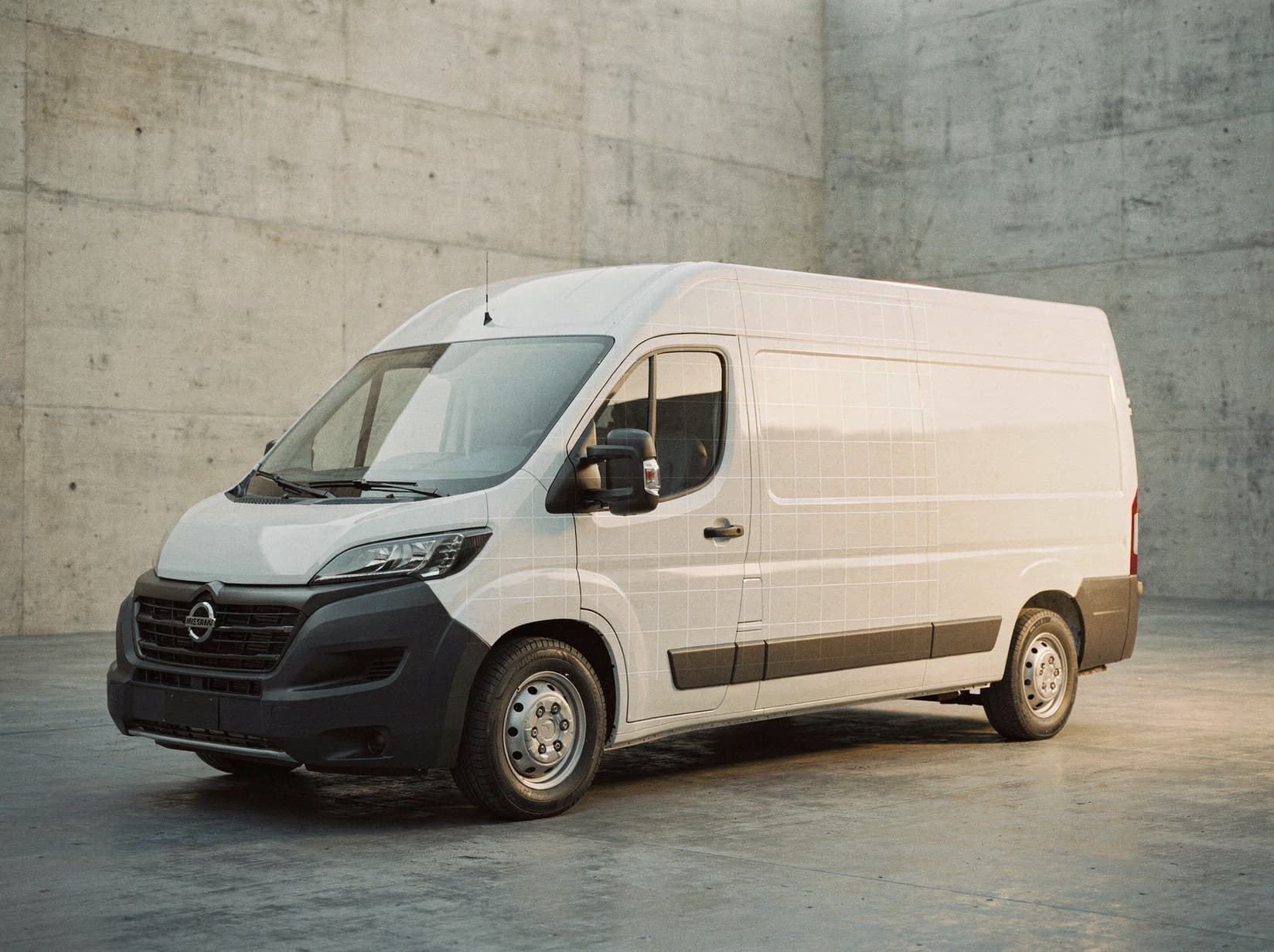
| Cargo van (Sprinter, Transit, ProMaster) | $2,500 – $5,000 | The most-quoted vehicle in commercial wraps. Big flat panels, easy to template. |
| Pickup truck (full-size) | $2,500 – $4,500 | Bed exterior, doors, hood. Tailgate and rear quarter add complexity. |
| Box truck (16–26 ft) | $5,000 – $12,000 | Huge flat real estate. Pricing scales with box length and roll-up door coverage. |
| Food truck (step van or trailer) | $3,500 – $8,000 | Service window, equipment cutouts, and health-code copy add design time. |
| Bus (transit, school, charter) | $8,000 – $20,000 | Full coverage with window perforation. Curved sides and many windows. |
| Trailer (24–53 ft) | $8,000 – $18,000 | Massive flat coverage. Often calendared because flat panels don't need cast. |
| Race car / sports car | $3,500 – $7,000 | Cast film over compound curves, often paint-matched colors, tighter tolerances. |
| Motorcycle | $800 – $2,500 | Small surface area but tight curves and many small parts. |
These ranges align with industry-published pricing across SignBuilder Illustrated rate cards, regional shop survey data, and 3M's wrap economics resources for installers.[3M Vehicle Graphics]
The four variables that move the price
A quote isn't one number — it's the sum of four decisions. Understanding each lets you read a quote and know what you're trading off.
1. Material grade (cast vs. calendared)
This is usually the biggest line item. Cast vinyl runs roughly 2× the per-square-foot cost of calendared, and cast laminate adds another 30–50% on top of calendared laminate.
Cast is the right answer for full vehicle wraps, anything with compound curves, or any wrap that needs to last 5+ years. Calendared works for flat panels, short-term campaigns, and partial wraps on simple geometry. For the deeper breakdown of when each makes sense, see the vehicle wrap material guide.
A shop quoting "premium calendared" for a full van wrap is usually saving you 25–35% on materials at the cost of 50–70% of the wrap's lifespan. That math rarely pencils out for fleet branding.
2. Design complexity
Stock template livery on a fleet van: 2–4 hours of design work. Custom illustration, custom typography, photo composition wrapped around compound curves: 20–60 hours.
Most quotes don't break out design separately, but it's typically 15–35% of a custom-design wrap quote. If you bring print-ready files (or design in-house with software that exports panel-ready output), you can knock 20–30% off the quote.
Tip
If your team designs in-house, ask the shop to quote "print and install only" with files supplied. Most shops will do this — and the savings on a fleet rollout add up fast. The catch: your files need to be panel-aware, with bleed and overlap built in. A flat Illustrator file dropped on a van will cost more in panel realignment than the design savings.
3. Install labor and shop overhead
Install is where regional pricing diverges. A small van wrap takes 8–12 hours of skilled installer time. At a $90/hr shop in a secondary market, that's $720–$1,080 in labor. At a $150/hr shop in NYC or San Francisco, the same install is $1,200–$1,800.
The shop's overhead — rent, climate-controlled bay, calibrated printer, certified installers — is the rest of the markup. A 2-bay garage in a low-rent metro can quote profitably at numbers a Manhattan shop literally cannot match.
4. Coverage (full vs. partial)
A "full wrap" covers every panel of the vehicle including the roof. A "partial wrap" covers some subset — often the rear quarters, doors, and hood, leaving the roof, lower panels, or sometimes the front fascia in factory paint.
The hidden cost of a partial: if your van's factory paint is, say, "Oxford White," the wrap's white needs to match it within a delta-E that holds up across panels and across years. Sun fade on the unwrapped paint will eventually break the match. For a brand-critical fleet, full wrap is often the safer call even at 1.5× the cost.
Why two shops quote the same van so differently
Three reasons the same Sprinter gets a $2,200 quote and a $4,800 quote:
The materials aren't the same. The cheap quote is calendared vinyl with calendared laminate; the expensive quote is 3M IJ180mc + 8518 laminate with a 7-year warranty. Both are real products, both will go on the van, but the cheap one will lift on the wheel arches in 12–18 months. Ask both shops for the exact vinyl SKU and laminate SKU and the picture clears up immediately.
The labor isn't the same. The cheap shop has a single-bay garage and a part-time installer. The expensive shop has a climate-controlled bay, two certified installers, and uses a panel-by-panel install plan. The expensive shop's wrap will have fewer bubbles, tighter seams, and zero failed panels. The cheap shop's wrap might be perfect or might need a return visit.
The design effort isn't the same. The cheap quote assumes you're supplying print-ready files. The expensive quote includes 12 hours of custom design work. If you have files, push back and ask for the print-only number.
When you compare quotes apples-to-apples — same vinyl, same laminate, same coverage, same design scope — the spread usually compresses to 20–30%. That's normal market variance. A 100%+ spread almost always means you're comparing different specs, not different shops.
Fleet pricing: where the math gets interesting
Single-vehicle wraps follow the ranges above. Fleet wraps (5+ vehicles, same design) follow different economics.
Volume gets you three discounts:
- Material bulk pricing — buying a 50-yard roll instead of a 10-yard roll cuts material cost roughly 15–25%.
- Design amortization — the design work happens once and prints across all vehicles. On a 20-vehicle fleet, the design line item drops to a few percent of the per-vehicle cost.
- Install efficiency — installers learn the vehicle. The fifth Sprinter goes on 30% faster than the first.
A typical fleet quote might land at:
- 5–10 vehicles: 10–15% off single-vehicle pricing
- 10–25 vehicles: 20–30% off
- 25+ vehicles: 30–40% off, often with a phased install schedule
If you're rolling out wraps across more than five vehicles, ask shops for a fleet rate explicitly — and ask whether they can do staggered installs to keep your fleet on the road during the rollout.
Regional pricing in 2026
Three rough tiers:
- Tier 1 metros (NYC, SF, LA, Boston, Seattle, DC): Top of every range above. Install labor at $130–$180/hr. Cargo van full wraps land $4,000–$6,500.
- Tier 2 metros (Atlanta, Denver, Phoenix, Dallas, Minneapolis, Chicago): Middle of the ranges. Install labor at $95–$130/hr. Cargo van full wraps land $3,000–$4,500.
- Tier 3 metros and secondary markets: Bottom of the ranges. Install labor at $70–$95/hr. Cargo van full wraps land $2,200–$3,500.
If you have a multi-market fleet, this matters. Wrapping ten vans across Atlanta and Cleveland costs less than wrapping five vans in Manhattan. For franchise or distributed-fleet rollouts, it's worth pricing each metro independently rather than negotiating a single national rate that averages out unfavorably for low-cost markets.
What's not in the quote (and what you should ask about)
Three line items that frequently surprise buyers:
Removal. When the wrap comes off — at lease return, vehicle resale, or rebrand — removal isn't free. Budget $400–$1,200 per vehicle for clean removal, more if the wrap is older than 5 years or if a permanent adhesive was used. Removable adhesive at install time costs slightly more upfront and saves significantly at removal.
Damage repair before wrap. Wraps cover dents, scratches, and minor body damage but they don't hide them — every flaw shows through. Most shops will quote a pre-wrap prep budget of $200–$800 for small dent removal and panel cleaning. Skipping this step shows up in the wrap's appearance.
Photography and assets. Some shops include "delivery photography" of the wrapped vehicle (useful for your marketing). Most don't. If you want professional photos for case studies or social, ask if the shop offers it as an add-on or budget $300–$800 for a separate photographer.
How to read a wrap quote
A good quote breaks out:
- Vinyl SKU (3M IJ180mc, Avery MPI 1105, Oracal 3951RA, etc.)
- Laminate SKU (3M 8518, Avery DOL 1460, etc.)
- Square footage of coverage
- Design hours included (with hourly rate if billed separately)
- Install hours estimate
- Warranty terms (manufacturer warranty + shop install warranty separately)
- Removal terms (whether removal is included in a future lease return)
A quote that shows you a single number with "vehicle wrap" as the line item is hiding decisions. Push back and ask for the breakdown. Any reputable shop will provide it — and if they won't, you've learned something important about how the project is going to go.
If you're spec'ing wraps for a brand or a fleet for the first time, the cost question is downstream of the design question. Get the design right first — vehicle-aware, panel-ready, with brand standards baked in — and the print-and-install economics fall into place. Surface for in-house brand teams → gives marketing teams a way to design vehicle-accurate wraps without hiring a wrap specialist.
Related on Surface
Try Surface for free
The design tool built for vehicles, billboards, and every surface in between.
Keep reading
More from the blog
Pricing
Delivery Van Wrap ROI: The Math by Route Type, City, and Fleet Size
An honest deep-dive on delivery van wrap ROI — how route type, city, and fleet size change the math, and how it stacks up against paid digital and OOH.
Read
Workflow
In-House vs. Agency Wrap Design: A $-and-Time Decision Matrix
A decision framework for brand teams choosing between in-house wrap design and outsourcing to an agency — the cost, speed, consistency, and scaling tradeoffs that actually matter.
Read
Workflow
Vehicle Wrap Install Timeline: What to Actually Expect, Day by Day
A buyer-side week-by-week timeline for vehicle wrap installs — what each phase covers, what slows it down, and what to do upstream to hit your launch date.
Read